Air Defense Artillery service during the Vietnam War
PHOTO GALLERY
AN ONGOING WORK IN PROGRESS
Photo Gallery Structure
This Photo Gallery is organized by US Army Vietnam Air Defense weapons systems and the units equipped with them. The pictures have been shared by Veterans and their families, most of whom are members of the National Dusters, Quads & Searchlights Association. We thank them for their service and for being a huge part of preserving our heritage.
Table of Contents
Dusters
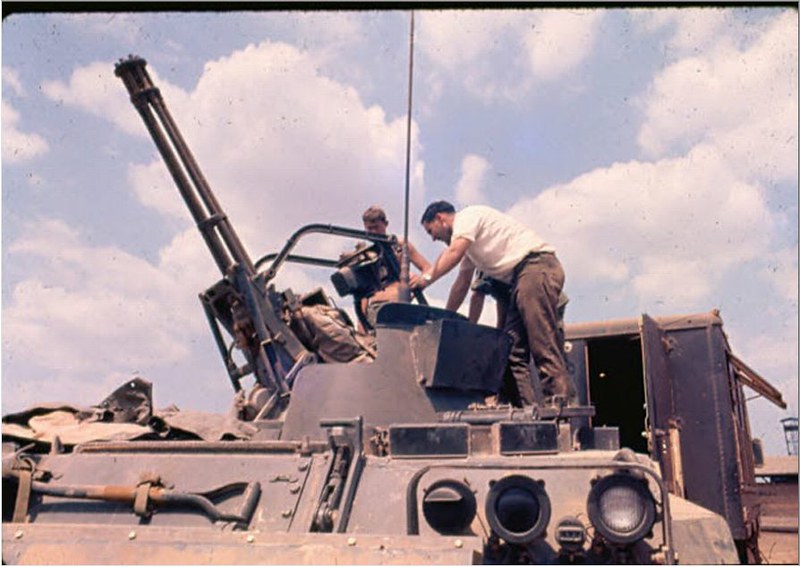
1st Battalion, 44th Artillery Twin 40mm “Dusters”
Information about 1st Battalion, 44th Artillery Twin 40mm “Dusters”
The 1st Battalion, 44th Artillery, with attached Battery G, 65th Artillery (M-55), and Battery G, 29th Artillery (Searchlight), supported the 3rd Marine Division in northern I Corps area. Based at Dong Ha and Da Nang, 1/44 operated from Phu Bai in the south to Con Thien in the north and Khe Sanh in the west.
The last contingent of Khe Sanh-based United States Marines on board an M42 Duster self-propelled anti-aircraft gun during the evacuation of Khe Sanh Combat Base (KSCB) in Khe Sanh, Vietnam, 4th July 1968. The Battle of Khe Sanh was conducted in the Khe Sanh area of northwestern Quang Tri Province, with US forces defending Khe Sanh Combat Base. A human skull has been attached to the front of the gun turret of the vehicle. (Photo by Bettmann Archive via Getty Images)
44ADARegtDUI
Mai Loc April 1970, photo by Rayford Martin, C 1/44. His section was sent after being overran at Khe Gio Bridge on March 12. This camp was overran 13 April, days after this photo was taken.
The Mai Loc monsoon mud C 1/44 1969
Joseph Belardo receives a Purple Heart from Captain Vincent Tedesco 1968
After Khe Sanh was abandoned, Mai Loc, a Special Forces A team camp, became the furthest north west position for the balance of the war. I was a regular C 1/44 rotation position.
Mai Loc resettlement village
Mai Loc 2017
Khe Gio Bridge September 1969 Walter McCoy, KY
Khe Gio position on top of hill, taken a couple months prior to the March 1970 attack.
Khe Gio bridge position after security upgrades after base was over ran March 1970.
Steve Owen and Bill Pucket with the replacement crew of D231. The original crew was in a fire fight, and Charles Ford was our first KIA on April 6.1967. This picture was taken at the Base Camp outside Phu Bai Airport.
4th Battalion, 60th Artillery Twin 40mm “Dusters”
Information about 4th Battalion, 60th Artillery Twin 40mm “Dusters”
The 4th Battalion, 60th Artillery, with attached Battery E, 41st Artillery (M-55), and Battery B, 29th Artillery (Searchlight), belonged to the 41st Artillery Group of I (First) Field Force Artillery and operated out of Qui Nhon, An Khe and Tuy Hoa.
4th Battalion, 60th Artillery (Automatic Weapon, Self-Propelled), Arrived Vietnam: 11 March 1967 Departed Vietnam: 21 December 1971, Previous Station: Fort Bliss, Authorized Strength: Battalion 1968 – 692 1970 – 698
The 4th Battalion of the 60th Artillery was a automatic weapons battalion composed of 40mm M42 dual “Duster” antiaircraft guns. Part of the 1st Artillery Group of I Field Force, Vietnam. It severed at Qui Nhon. On 17 February 1968 it was attached to I FFV Artillery and moved to An Khe on 28 June 1968. It went to Tuy Hoa in late 1970. The battalion was augmented with a battery of quad M55 .50-caliber machine guns-battery E, 41st Artillery.
60 AIR DEFENSE ARTILLERY-DUI
4/60 Track B141
4/60 C221
You Cant Park Here
Claymore the Monkey
How Heavy Is Dead
Duster time
5th Battalion, 2nd Artillery Twin 40mm “Dusters”
Information about 5th Battalion, 2nd Artillery Twin 40mm “Dusters”
The 5th Battalion, 2nd Artillery, with attached Battery D, 71st Artillery (M-55), and Battery I, 29th Artillery; (Searchlight), was assigned to II (Second) Field Force Artillery at Long Binh [north of Saigon].
The 5th Battalion of the 2nd Artillery was a self-propelled automatic weapons battalion consisting of M42A1 dual 40mm antiaircraft guns mustered from Reserve and National Guard assets to be utilized in a ground support role. The battalion serving with II Force Field Vietnam Artillery, arrived at Qui Nhon and located to Long Binh. It was augmented with a battery of 50-cal quad machine guns, Battery D, 71st Artillery.
5-2 ARTILLERY REGT-DUI
The "Wind Bunch" B/5/2 1971 A road run on QL22 in Tay Ninh Province. Agent Orange defoliants have wreaked havoc on what was once triple canopy jungle as well as all humans who live there. Photo and caption by LT Ed Travis who was on the "Peacemaker" sister track behind.
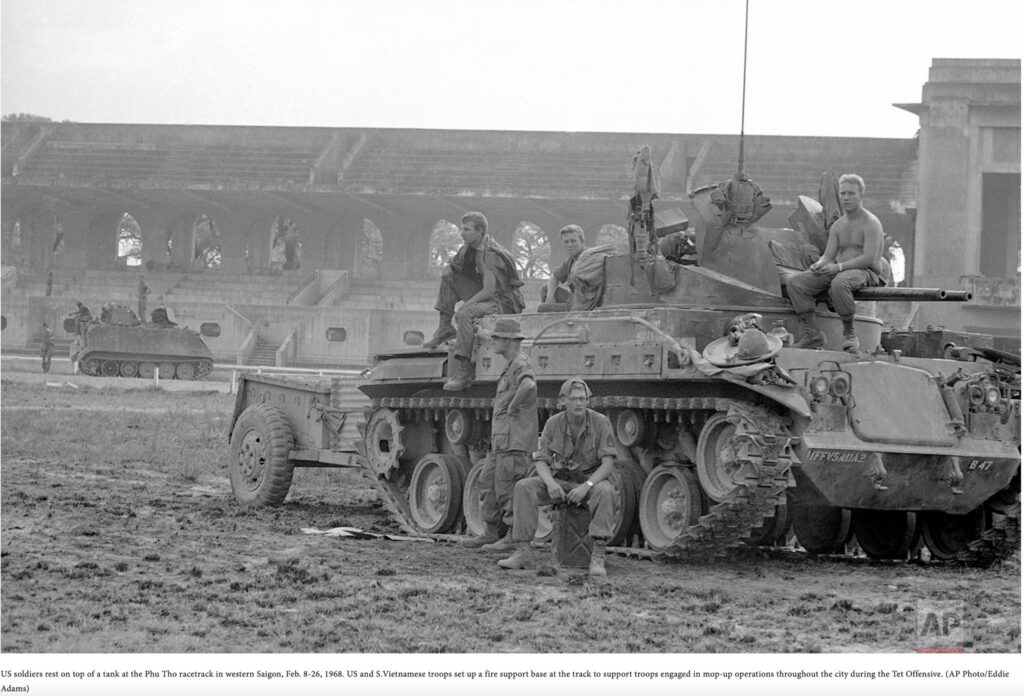
This is Track B47 of 5th Battalion/2nd Artillery at the Phu Tho racetrack in western Saigon, Feb 8-26, 1968. The Duster commander is reported to be SSG Carl Henderson (seated) with his crew; SP4 Condon Payne (boonie hat), SP4 Tom Glass is sitting on the barrels of the gun. Two of the other crewman are reported to be PFC Woodstead and PFC Schulty.
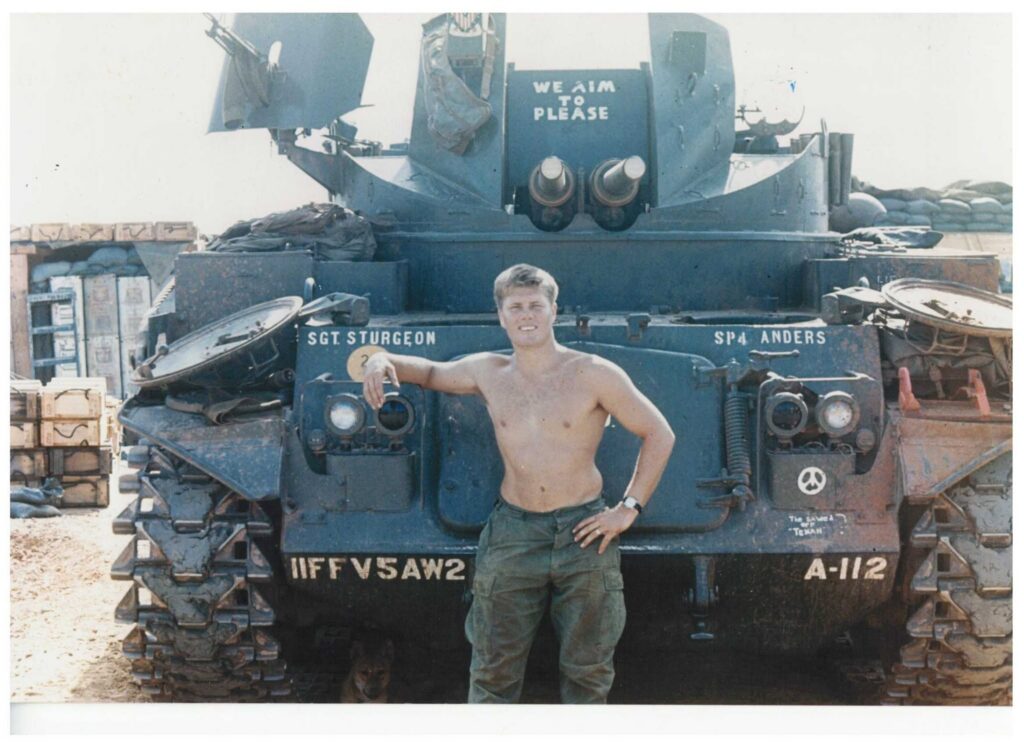
Bill Sturgeon 68-69 A/5/2 with his Duster A-112 at Phu Loi. Locations included Venable Heights, Dian, Pagoda Inn, Cau Khe, Thunders, Dau Tieng. Attached to 1st Infantry Division.
QUADS
Battery E, 41st Artillery Quad 50 Caliber (MG)
Information about Battery E, 41st Artillery Quad 50 Caliber (MG)
Battery E, 41st Artillery (M-55), was attached to The 4th Battalion, 60th Artillery
41FARegtDUI
Ready to rock n roll
Gunner Tom Warchola
"Alive& Kickin"
Quad 50
Mod Quad
Mad Man Quad 50
"Hired Killers"
Battery G, 55th Artillery Quad 50 Caliber (MG)
Information about Battery G, 55th Artillery Quad 50 Caliber (MG)
A separate Quad unit, Battery G of the 55th Artillery, was assigned to the Americal Division at Chu Lai.
Editor Note: We are very fortunate to have a 33 page document about G/55 operations that was prepared by the historian of the Americal Division Veteran’s Association.ARTY_G_55 research by Americal Div
“A connection will always exist between the veterans who served with Americal Division to the G Battery 55th Artillery Battalion veterans in the Vietnam conflict. Everyone who ever saw the Quad .50 caliber weapons firing can’t forget.” The monument dedicated to artillerymen at Ft. Sill by the Americal Division Veteran’s Association includes G/55th Artillery.
Battery G, 55th Artillery (.50-Caliber Machine Gun), Arrived Vietnam: 26 February 1968 Departed Vietnam: 31 July 1971 Previous Station: Fort Bliss, Authorized Strength: Battery 1968 – 142 1970-114
Battery G of the 55th Artillery was a quad M55 mounted .50-caliber machine gun battery stationed at Chu Lai and was attached to the 23rd Infantry Division (AMERICAL) after 13 April 1968. It provided convoy security, combat assault support and perimeter defense.
"Powerful Protection Comes in Fours" from Americal Division Newspaper Southern Cross 15Sep1968
55 AIR DEFENSE ARTILLERY REG-DUI
Battery G, 65th Artillery Quad 50 Caliber (MG)
Information about Battery G, 65th Artillery Quad 50 Caliber (MG)
Battery G, 65th Artillery (M-55), was attached to The 1st Battalion, 44th Artillery.
65 AIR DEFENSE ARTILLERY BN-DUI
Battery D, 71st Artillery Quad 50 Caliber (MG)
Information about Battery D, 71st Artillery Quad 50 Caliber (MG)
Battery D, 71st Artillery (M-55), was attached to the 5th Battalion, 2nd Artillery.
71 AIR DEFENSE ARTILLERY-DUI
Searchlights
Battery B, 29th Artillery (Searchlights)
Information about Battery B, 29th Artillery
Battery B, 29th Artillery (Searchlight), was attached to the 4th Battalion, 60th Artillery.
29FARegtDUI
Battery G, 29th Artillery (Searchlights)
Information about Battery G, 29th Artillery
Battery G, 65th Artillery (M-55), was attached to the 1st Battalion, 44th Artillery.
29FARegtDUI
Battery H, 29th Artillery (Searchlights)
Information about Battery H, 29th Artillery
Battery H of the 29th Artillery (Searchlight), was a separate searchlight unit supporting operations of the 9th Infantry Division.
71 AIR DEFENSE ARTILLERY-DUI
Battery I, 29th Artillery (Searchlights)
Information about Battery I, 29th Artillery
Battery I, 29th Artillery; (Searchlight), was attached to the 5th Battalion, 2nd Artillery.
29FARegtDUI
HAWK
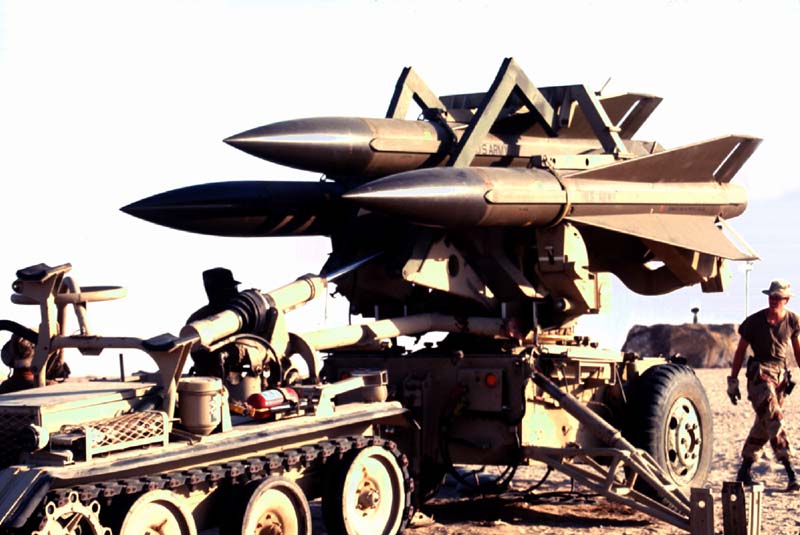
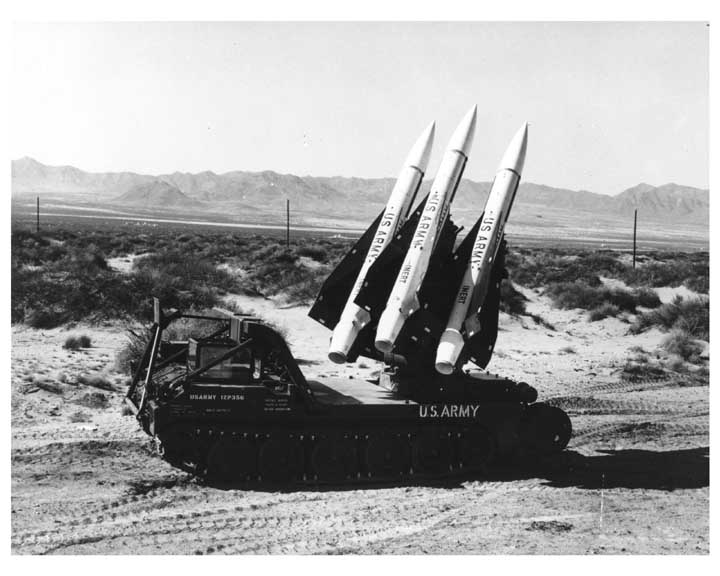
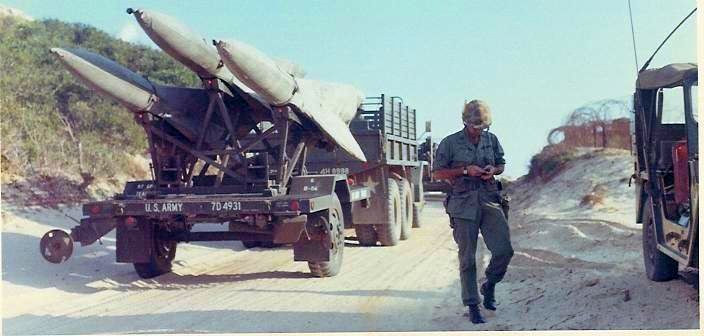
HAWK means ‘Homing All-the-Way Killer’ and was a medium range, surface-to-air guided missile that provided air defense coverage against low-to-medium-altitude aircraft. Basic HAWK was developed in the 1950s and initially fielded in 1960. The tracking system is a radar homer which picks up signals from a radar which are reflected by the target, and steers itself to the interception. The original launcher was a three-missile cluster on a trailer. Later a mobile configuration was developed.Hawk anti-aircraft missile units served in Vietnam with the 97th Artillery Group.
6th Battalion, 56th Artillery
The 6th Battalion, 56th Artillery (HAWK) had four line batteries, A, B, C and D and a headquarters battery (HHB). It was located in the Long Binh and Bien Hoa area north of Saigon with its headquarters on Long Binh. It primarily focused on providing air defense with its fixed site systems for the key areas of Tan Son Nhut, Bien Hoa, Long Binh, and Qui Nhon. The 6/56 deployed to Vietnam on 30 September 1965 and returned to the United States on 2 August 1969.
6th Battalion, 71st Artillery
The 6th Battalion, 71st Artillery was a mobile HAWK missile battalion located first at Qui Nhon. In 1966, as part of the 97th Artillery Group, the battalion was relocated to Cam Ranh Bay, where it remained until the last of its elements departed Vietnam.
6th Battalion, 71st Artillery (HAWK Missile), Arrived Vietnam: 29 September 1965, Departed Vietnam: 22 September 1968, Previous Station: Fort Bliss, Authorized Strength: 873
56 AIR DEFENSE ARTILLERY BN-DUI
71 AIR DEFENSE ARTILLERY-DUI
HAWK employment
hawk_XM548 Self Propelled White Sands
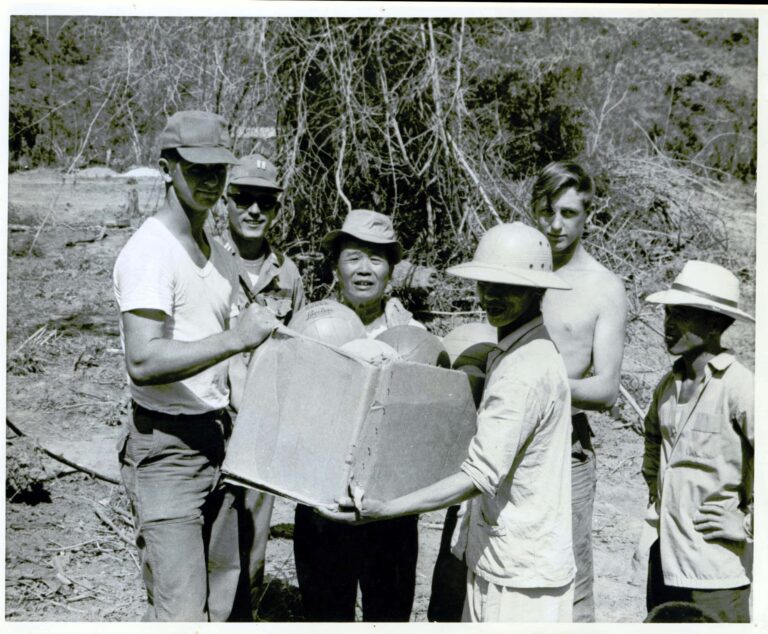
D-6_71st HAWKS on Civic Action Mission
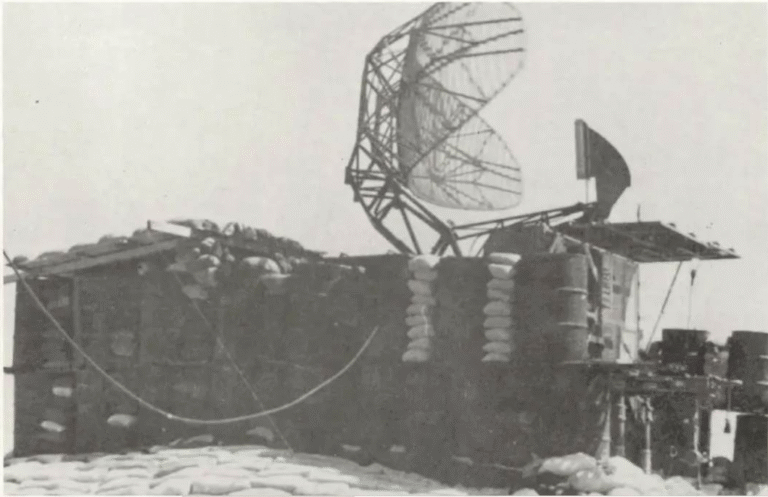
HAWK positions resembled sandbagged fortresses. During the monsoon, trenches dug through the fortifications turned into into moats.
HAWKS in Vietnam
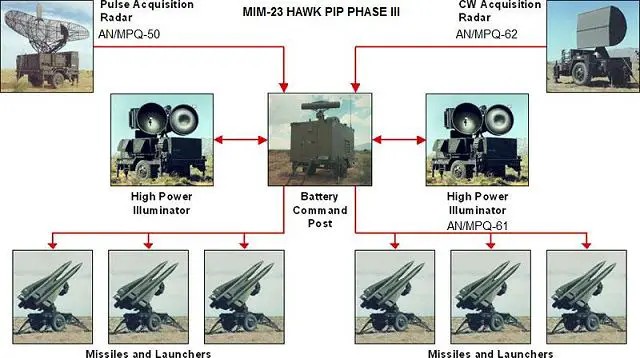
HAWK_MIM-23_launcher_unit Battery Configuration with Radar, Fire Direction Control and Launchers
VULCAN
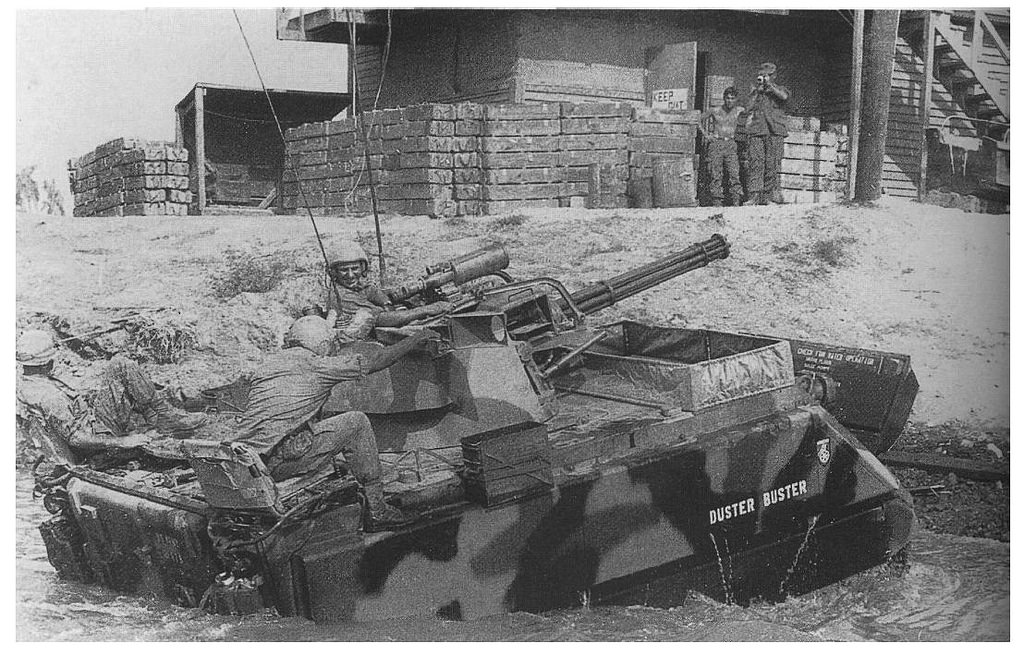
Vulcan 20mm Combat Team
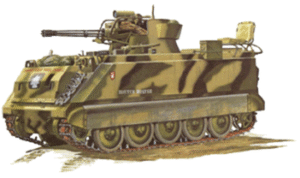
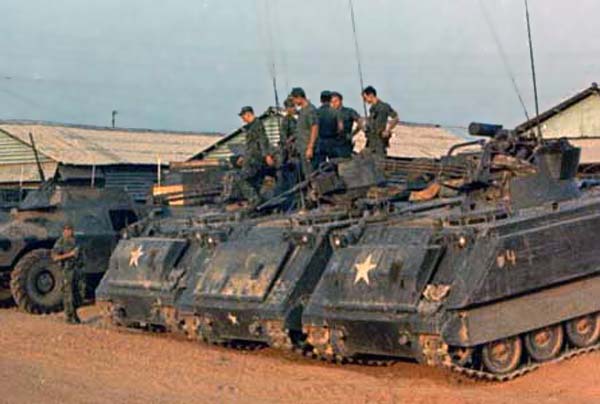
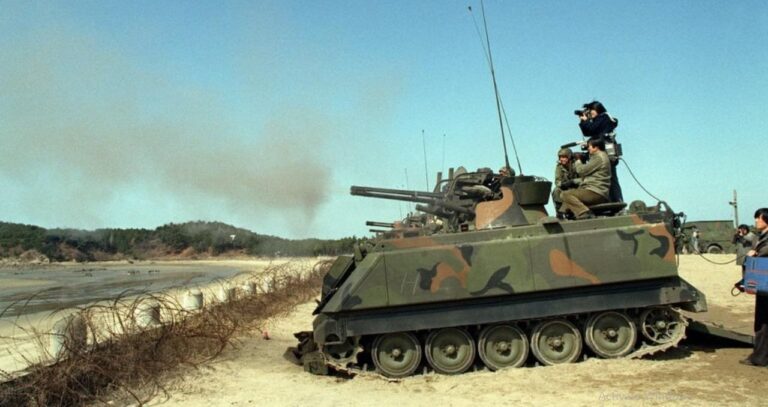
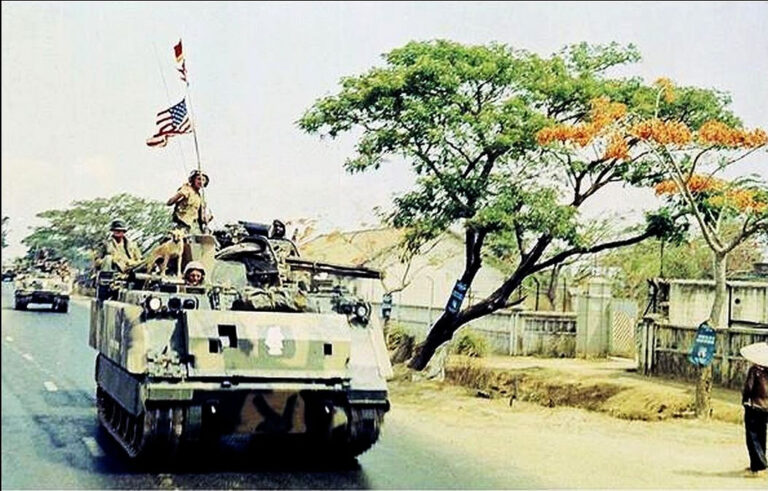
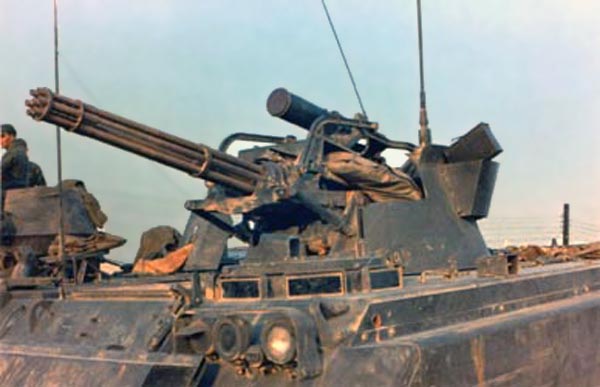
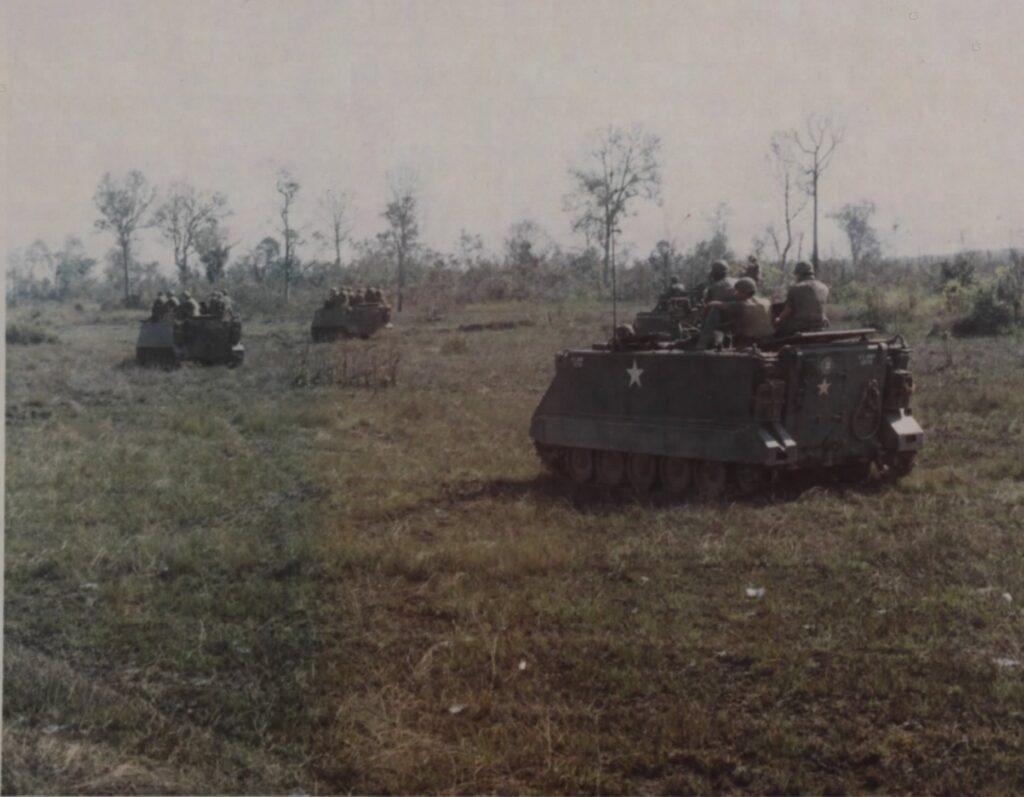
The 1st Vulcan Combat Team was deployed to Vietnam for combat evaluation in November 1968. The unit trained at Ft. Bliss, Texas, and all men were volunteers. They were scheduled to leave in March 1969, but stayed an additional 45 days to finish mopping up after the 1969 Tet offensive. The team consisted of five Vulcans, 2 officers, and 21 enlisted men. There was also a group of civilian technicians and Army observers/evaluators. The Vulcan Air Defense system was identified as the XM-163, each mounting the Vulcan M16A1 six barreled gatling gun on a converted M113A1 chassis. The 28 person unit was attached to the 5/2nd Artillery operating out of Long Binh and was supplemented by soldiers from the 5/2nd Artillery. They were used mainly in a convoy escort role to test the Vulcan’s suitability for the ground combat role.
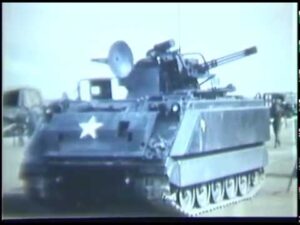
Combat Camera film Vulcan Combat Team arrival and demonstration
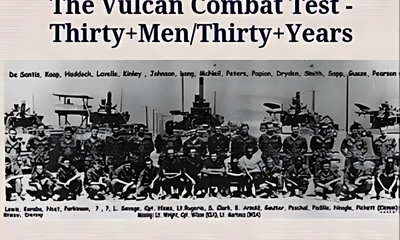
Vulcan Combat Team Picture
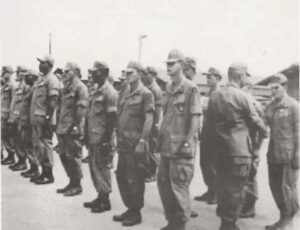
Members of the 1st Vulcan Combat Team are decorated at the end of the team's tour in Vietnam.
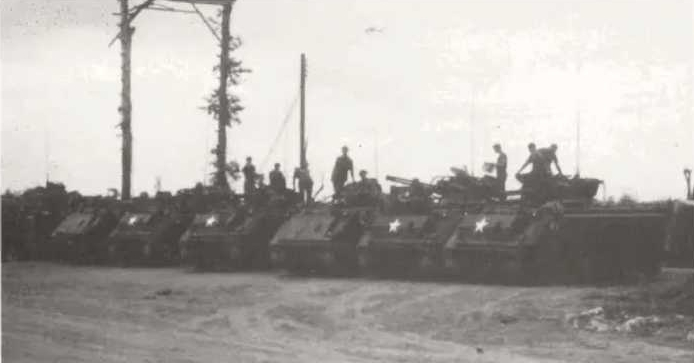
Prelude to combat. 1st Vulcan Combat Team crewmen inspect newly arrived tracks outside Saigon.
Civilian Technical Support came with the Vulcan Combat Team
Bien Hoa AB security M163 VADS 20mm Vulcan Cbt Team
Test Fire Vulcan Bien Hoa AB
Vulcan convoy security
Vulcan test water and mud traction
Bien Hoa AB security Vulcan Test Team under 5_2 Bn
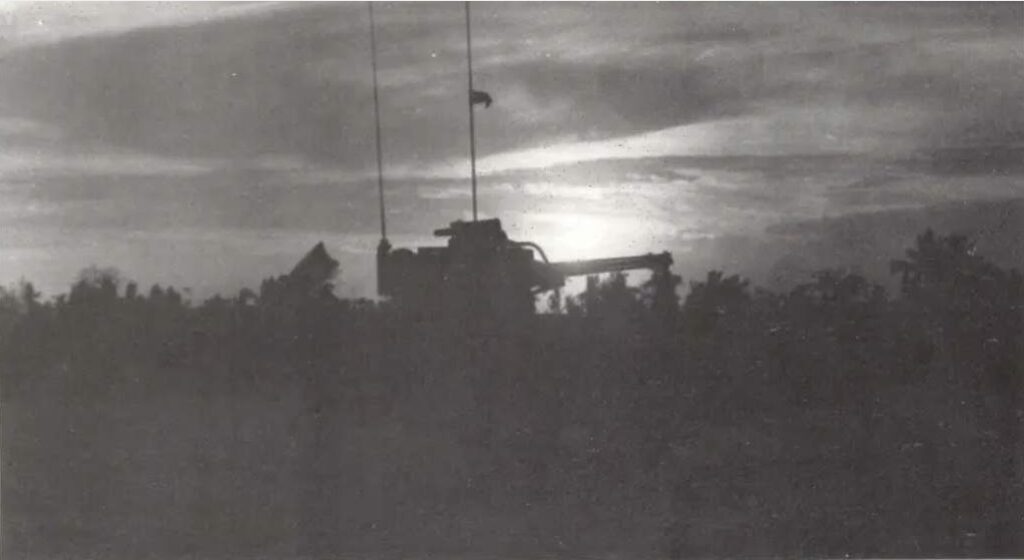
CSM Vincent De Santis' VULCAN siloutted by sunset glow. The night belonged to "Charlie" until massive firepower produced by weapons like the VULCAN decimated Viet Cong ranks during the Tet 1968 Offensive.
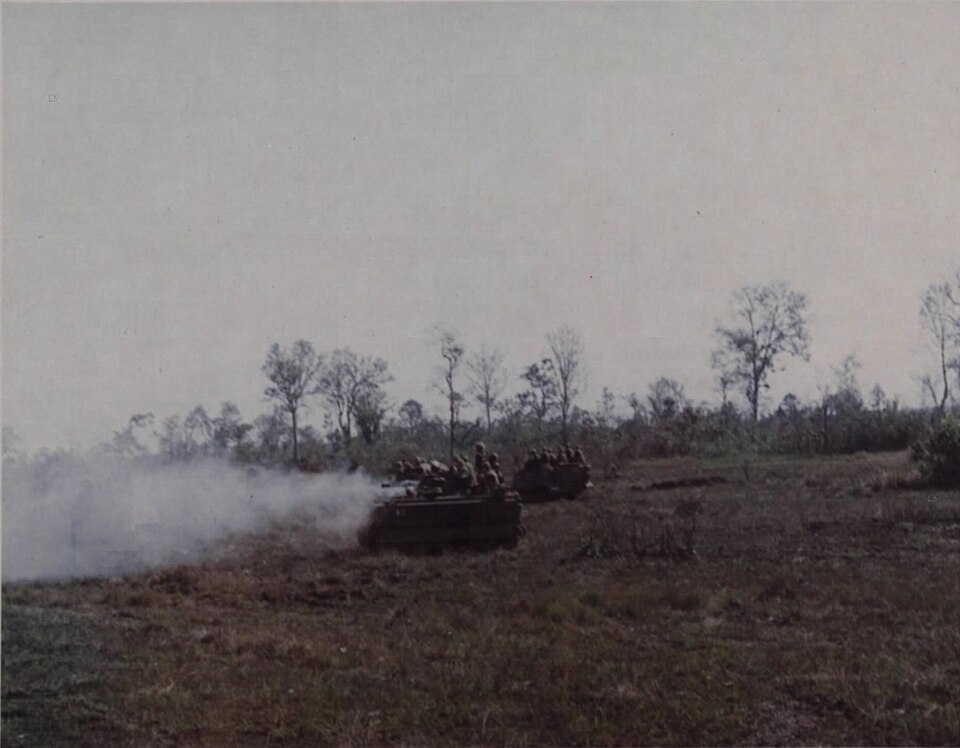
M163 Vulcan carriers on a search and destroy mission during operational testing Vietnam 1969
Vulcan carriers firing guns at bunkers during operational testing Vietnam 1969
SP4 Frank E. Mitchell / The National Archives.......An M-163 Vulcan fires into the brush to flush out enemy troops along Highway 13 in Vietnam. The M-163 Vulcan was a modified M-113 Armored Personnel Carrier with an M-61 Vulcan Air Defense System turret........Photo taken: January 1969
 NDQSA
NDQSA